Please update your browser

Your current browser version is outdated. We recommend updating to the latest version for an improved and secure browsing experience.

Lynne Ramsay

Color, Landscape, and Art in Scotland

The May Queen, Central Panel
(Margaret Macdonald Mackintosh, 1900, 
Kelvingrove Gallery and Art Museum, Glasgow)

The Wassail (Charles Rennie Mackintosh, originally for the Ladies' Luncheon Room, Ingram Street Tea Rooms, 1900, now held by the Kelvingrove Gallery and Art Museum, Glasgow)
Stained glass window from Charles Rennie Mackintosh's most thoroughly designed Glasgow Style building: The Hill House (Helensburgh, Scotland, 1902-1904)

Pure Colors

     Born in Glasgow, Lynne Ramsay trained as a painter and photographer at Napier College in Edinburgh. As her films demonstrate and as she explained in our interview, she has a pronounced interest in "pure colors."
     Her cinematic universe reflects the influences of both the international modernist and modern British styles of painting that she encountered. With their distinct art nouveau lines, elegant verticals, and integration of traditional craft elements into an orchestrated aesthetic design, the works of Charles Rennie Mackintosh and his wife Margaret Macdonald Mackintosh (above) are the quintessential manifestations of the Glasgow Style. Ramsay was equally influenced by the shifting colors of Paul Klee and Howard Hodgkin (below). Like painters such as Arthur Melville (below), her movement towards abstraction is almost always grounded in quotidian detail.
     The clip from Morvern Callar (2002), below, is emblematic in the transition from naturalistic spaces to bursts of strong color, geometric abstraction, and the haunting lines of lead actress Samantha Morton's face and eyes.

Ramsay on Color
Color, Landscape, and Art in Scotland
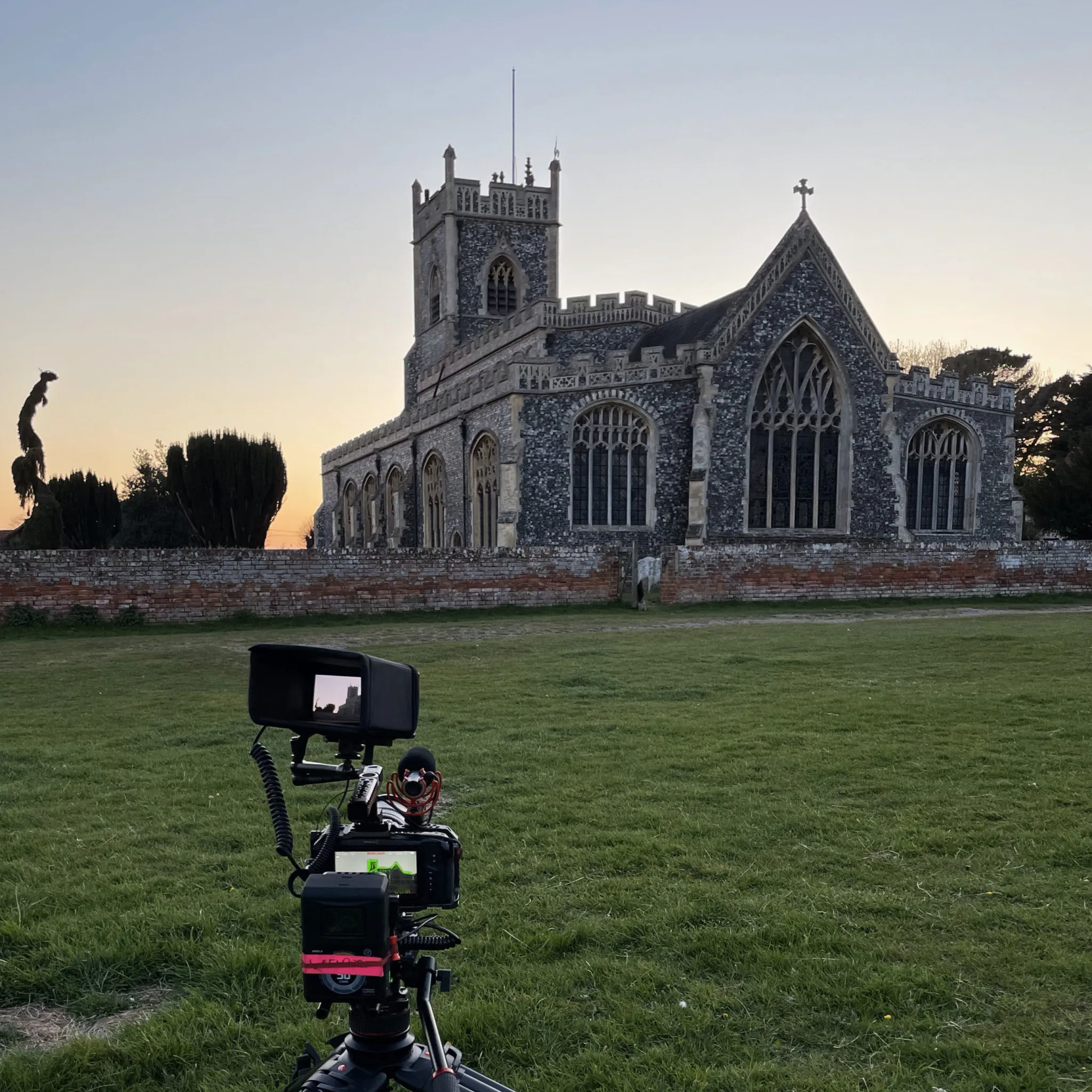
The Kelvingrove Art Gallery and Museum (May 2022, Film Secession)
Threatening Snowstorm (Paul Klee, 1927, National Galleries of Scotland, Edinburgh)
Portrait of the Artist (Howard Hodgkin, 1987, Private Collection)
A Cabbage Garden (Arthur Melville, 1888, National Galleries of Scotland, Edinburgh)
Christ of St. John of the Cross (Salvador Dalí, 1951, Kelvingrove Art Gallery and Museum, Glasgow)
Color, Landscape, and Art in Scotland
Vision After the Sermon (Jacob Wrestling with the Angel) (Paul Gauguin, 1888, National Galleries of Scotland, Edinburgh)

Religious Visions

     In her youth, Ramsay went to see the above painting by Spanish painter Salvador Dalí at the Kelvingrove Art Gallery and Museum every day. She was particularly impressed by the mysterious shifts in scale, which is reinforced at the Kelvingrove by dramatic lighting and the painting's placement in a separate room to the side of the main passageways.
     At the National Galleries of Scotland in Edinburgh, she would inevitably have encountered two visionary works made at almost precisely the same moment - Paul Gauguin's Vision After the Sermon (Jacob Wrestling with the Angel) (1888) and Vincent Van Gogh's Olive Trees (1889). Van Gogh, who originally planned to be a missionary, surely intended these gnarled, wind-whipped trees to evoke the ones in Gethsemane.
     Ramsay's use of color and natural elements in films like Morvern Callar (2002) and You Were Never Really Here (2017) demonstrates a similarly rich attentiveness to visual textures and sacred metaphor.

Ramsay on Dalí
Olive Trees (Van Gogh, 1889, National Galleries of Scotland, Edinburgh)
Color, Landscape, and Art in Scotland
The ending of Morvern Callar (Lynne Ramsay, 2002)
Color, Landscape, and Art in Scotland
Sunset Song (Terence Davies, 2015)

Scottish Art and Terence Davies

     Liverpudlian director Terence Davies spent a decade preparing his 2015 film adaptation of Lewis Grassic Gibbon's novel Sunset Song (1932). In our portrait film, he explains that the Danish painter Vilhelm Hammershøi was an ideal reference point for his treatment of Northern light, objects, and domestic spaces. 
     He was equally passionate about the work of Scottish painter, stained glass artist, designer, and architect Charles Rennie Mackintosh. To find the right way of depicting the unique color of the Scottish landscape and of orchestrating his subtly transformative camera movements, he traveled to the major Scottish galleries as well as The Hill House (above) to see Mackintosh's work in situ.

Davies on Scotland and Sunset Song (Chapter One)
Related exhibitions
  • Terence Davies
  • Darius Khondji
01
02
/ 02
0