Please update your browser
Your current browser version is outdated. We recommend updating to the latest version for an improved and secure browsing experience.
Wajda and Painting


Beyond Abstraction
As Krystyna Zachwatowicz-Wajda discusses in our portrait film, Andrzej Wajda originally wanted to be a painter, and he entered the Academy of Fine Arts in Kraków in 1946. He left in 1949 to attend the Łódź Film School.
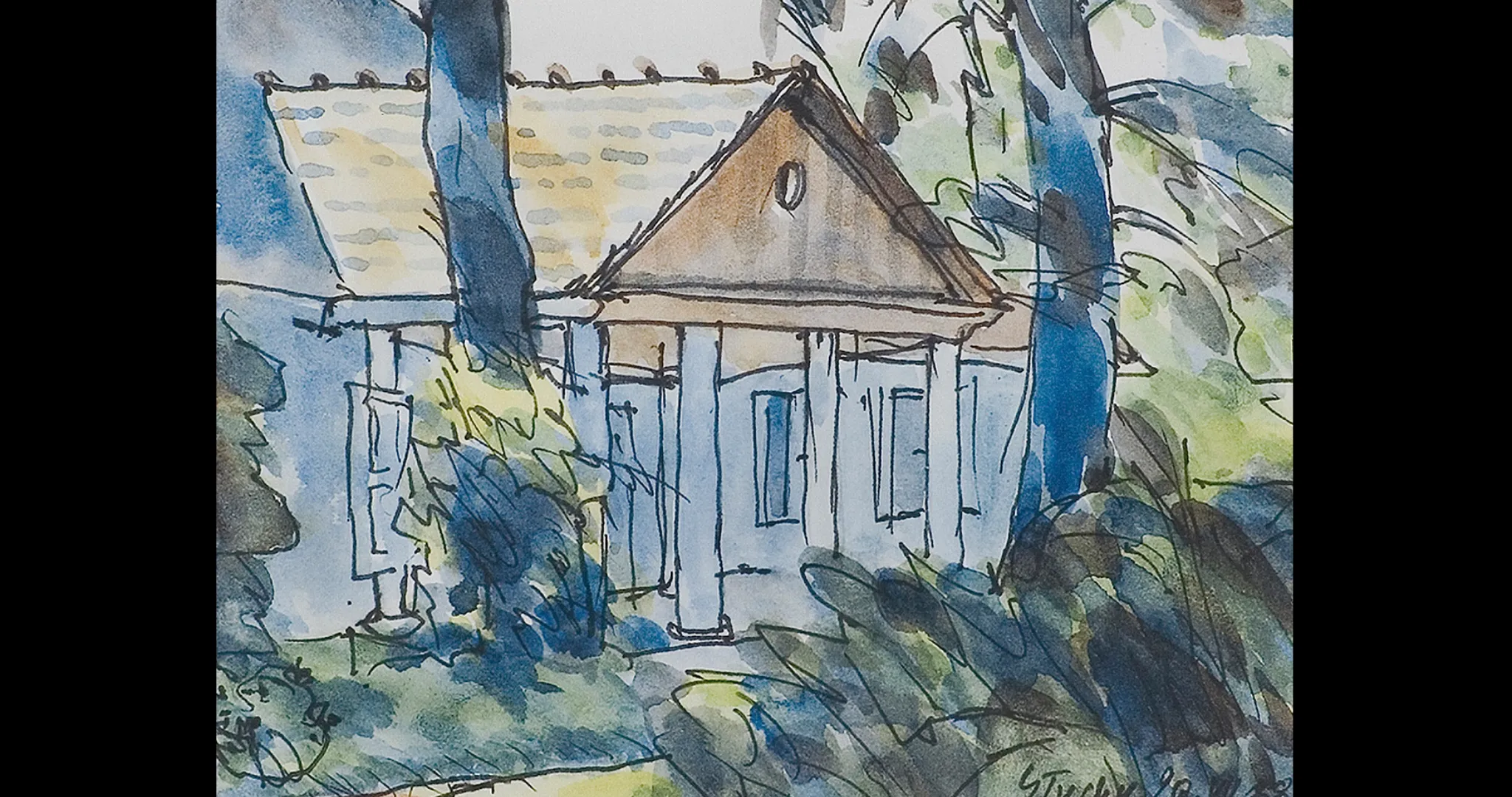
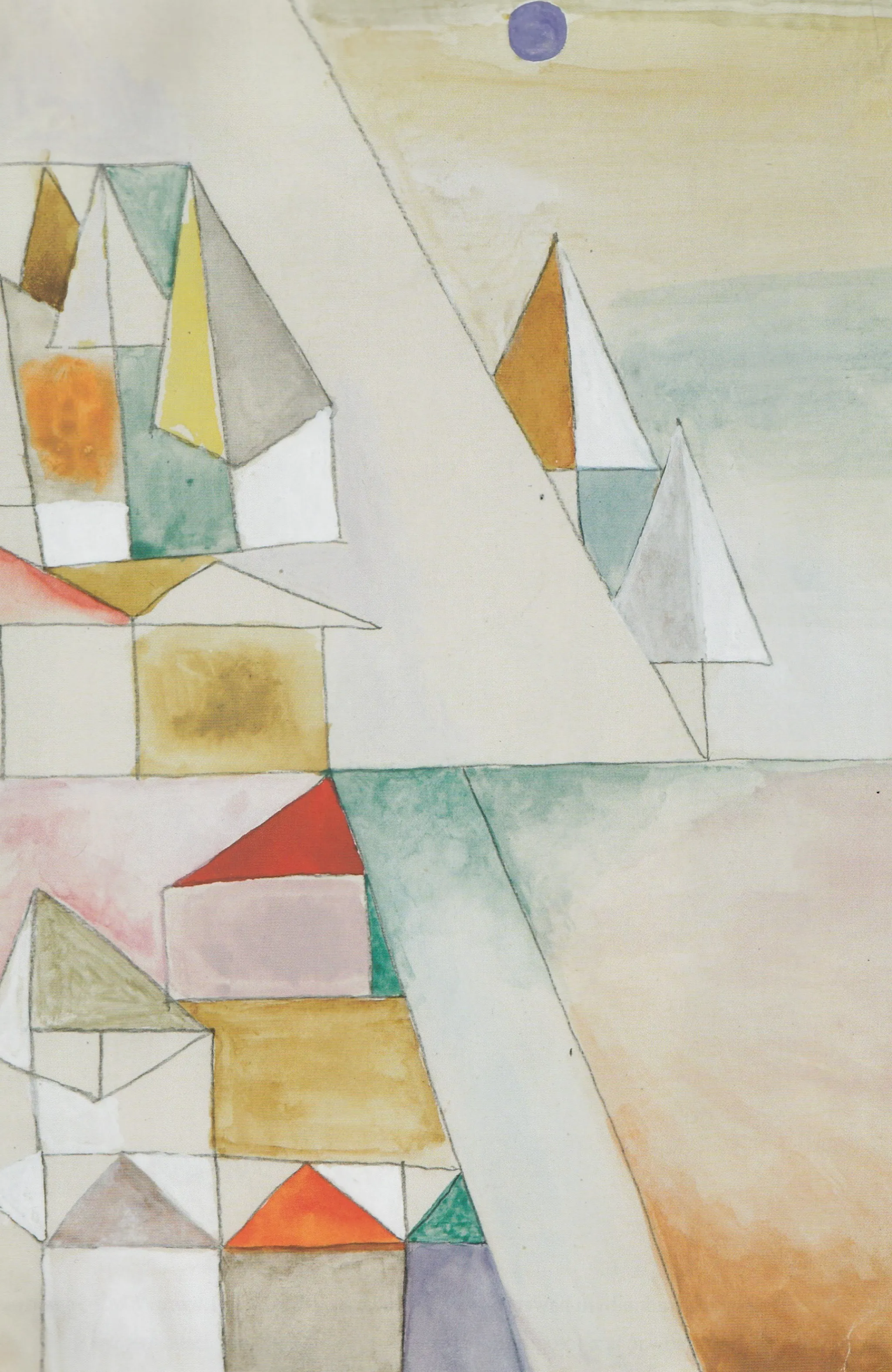
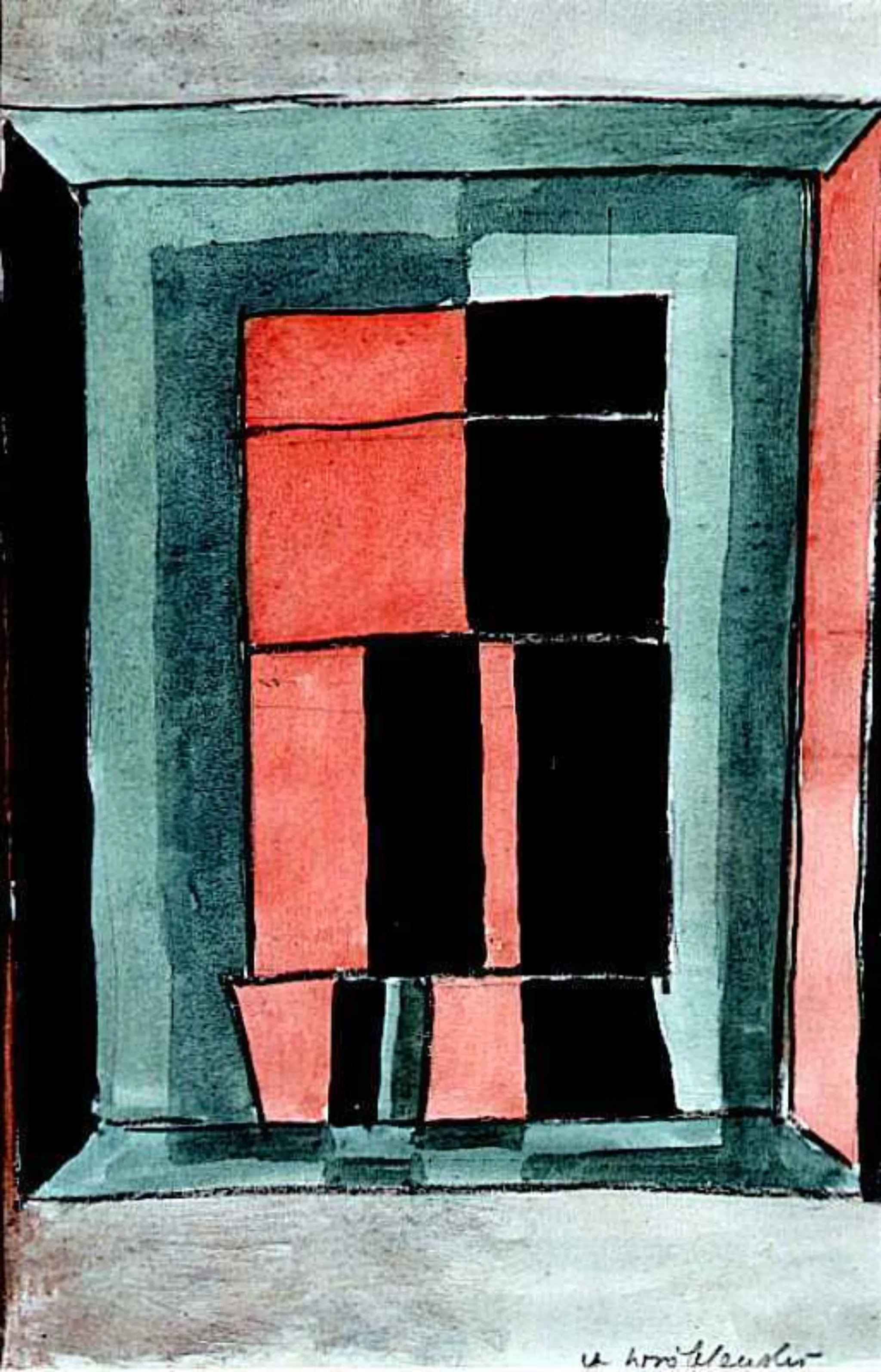
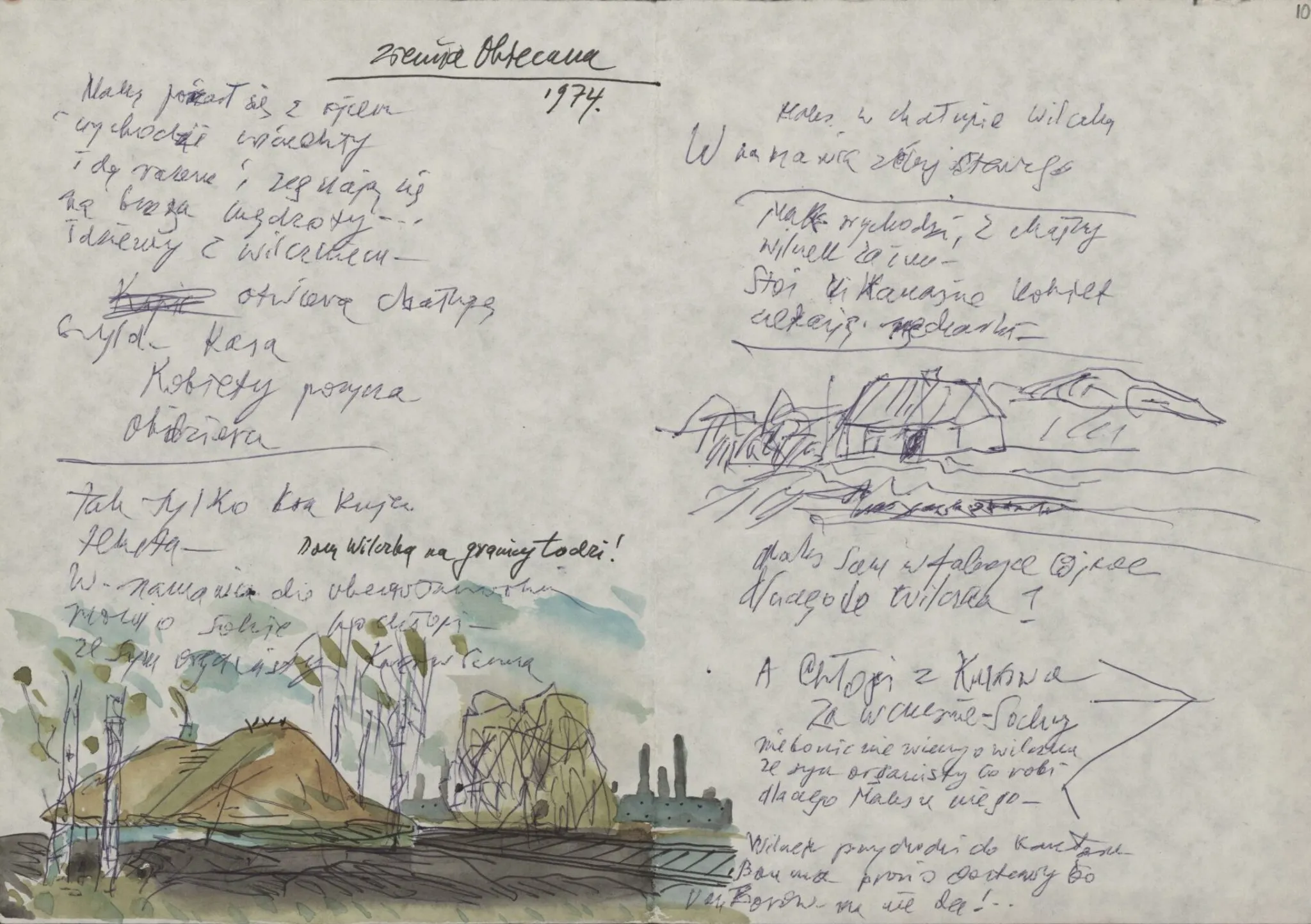
In the immediate postwar period, Polish painting was dominated by abstraction and Colorism. Wajda's early works are in this vein (above), but, like his contemporary Andrzej Wróblewski, he also immediately demonstrated a pronounced interested in representational figures and in images of home.
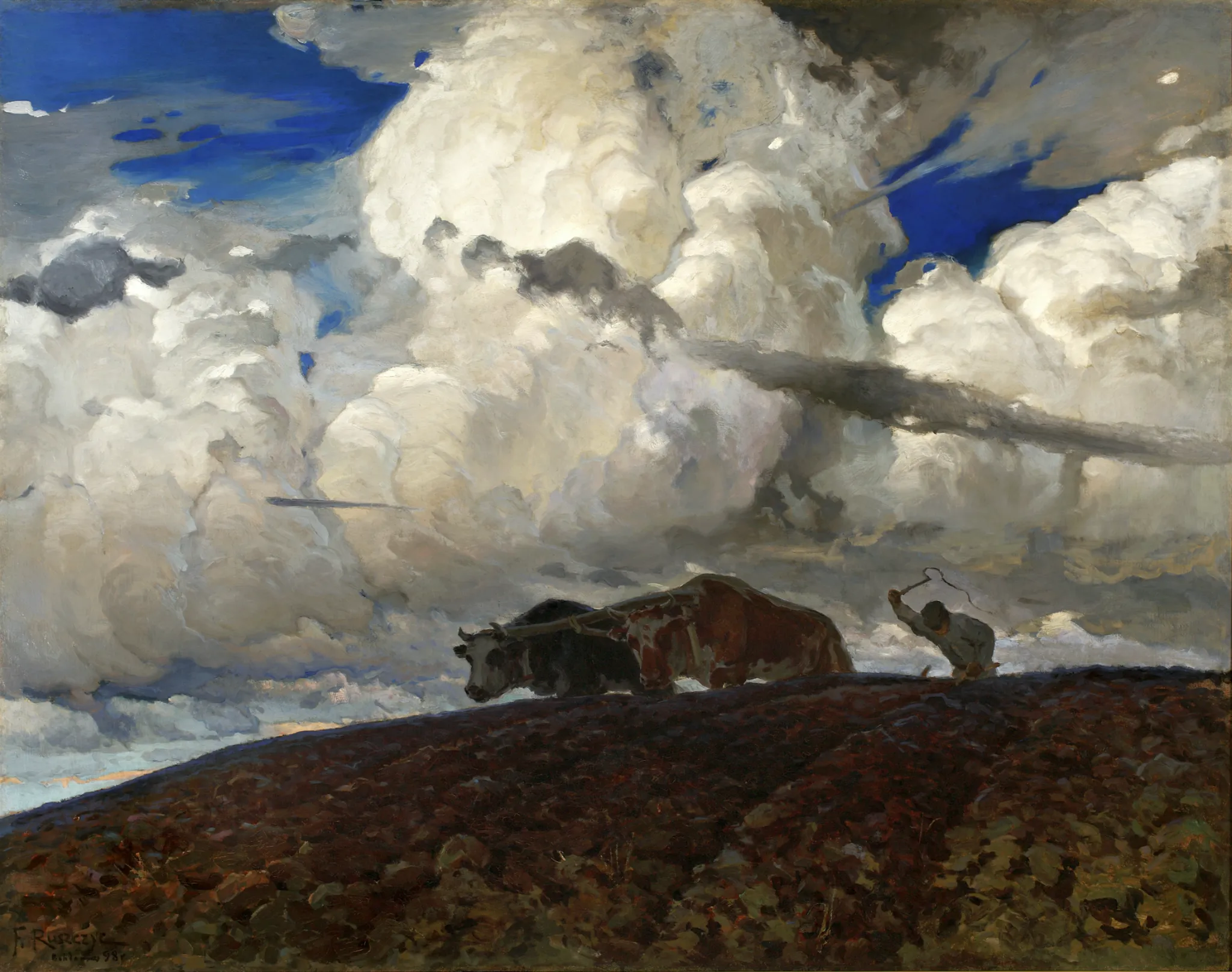
The salient reference points were provided by fin-de-siècle Symbolists like Stanisław Wyspiański, Jacek Malczewski, and Ferdynand Ruszczyc. Ruszczyc studied in St. Petersburg in the 1890s and was connected with influential Russian Symbolist magazines like World of Art (Mir Iskusstva), but his most celebrated paintings - such as Soil (1898, below) and Old House (1903, in the Exhibition room) - focused on distinctively Polish landscapes and themes.
Wajda recreates Ruszczc's Soil at the beginning of Ashes and Diamonds (1958, below) to establish a moral contrast between the natural harmony represented by the plowman and his oxen, to suggest the protagonist's estrangement from his environment and his mission, and to evoke the psychic terror signaled spatially by the plunging lines of the hill in both painting and film. In so doing, Wajda embraces a model of psychologically dense image-making that belies both abstraction and the orthodoxies of socialist realism.

The Wedding
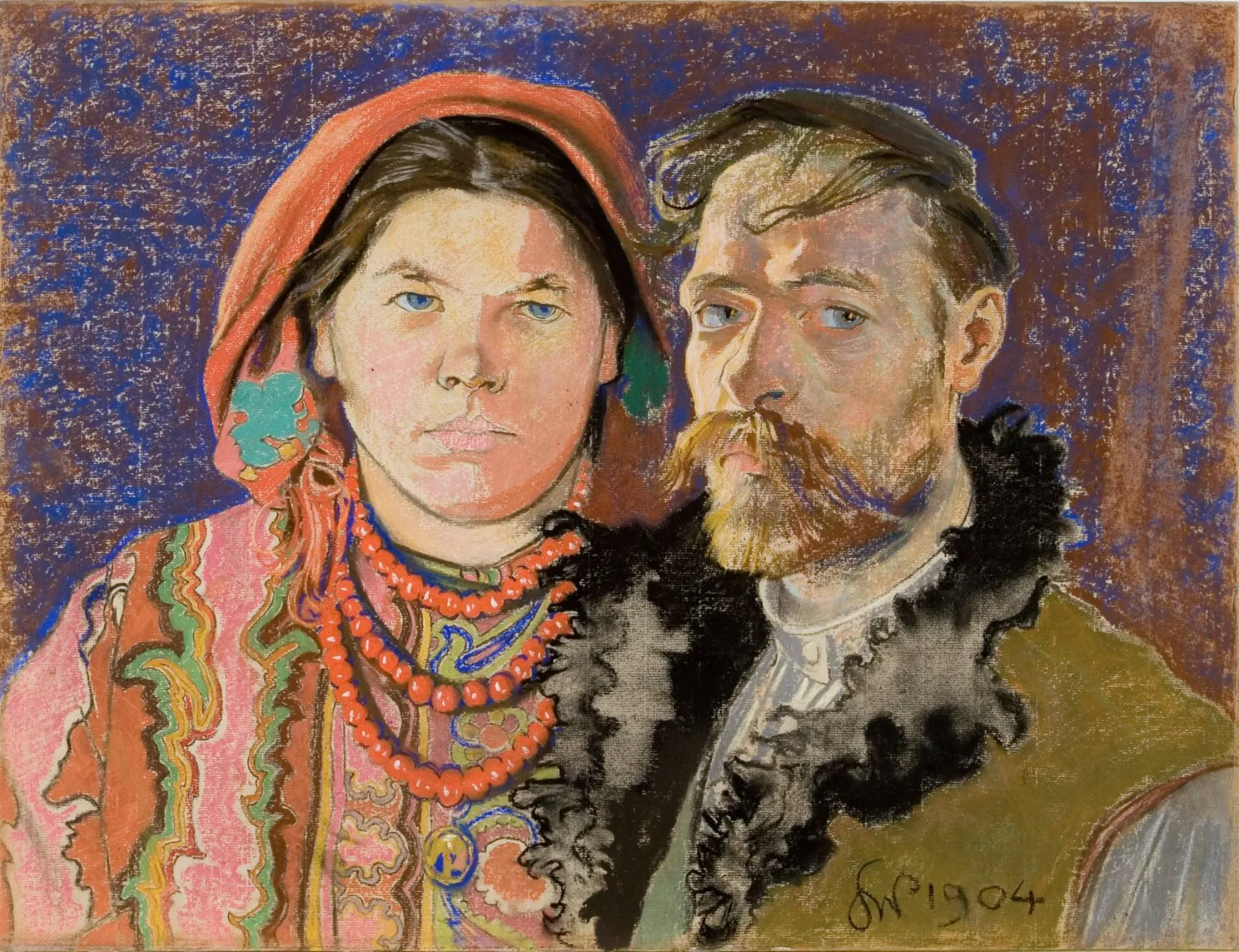
Best-known as a playwright and poet, Stanisław Wyspiański was also an accomplished painter and draftsman. Wyspiański wrote that his imagination "goes on all over the world and nowhere, around and inside me, necessarily with me and independently, in a space that is difficult to locate, for once I am in Syria, then in Antwerp, then in Worms."
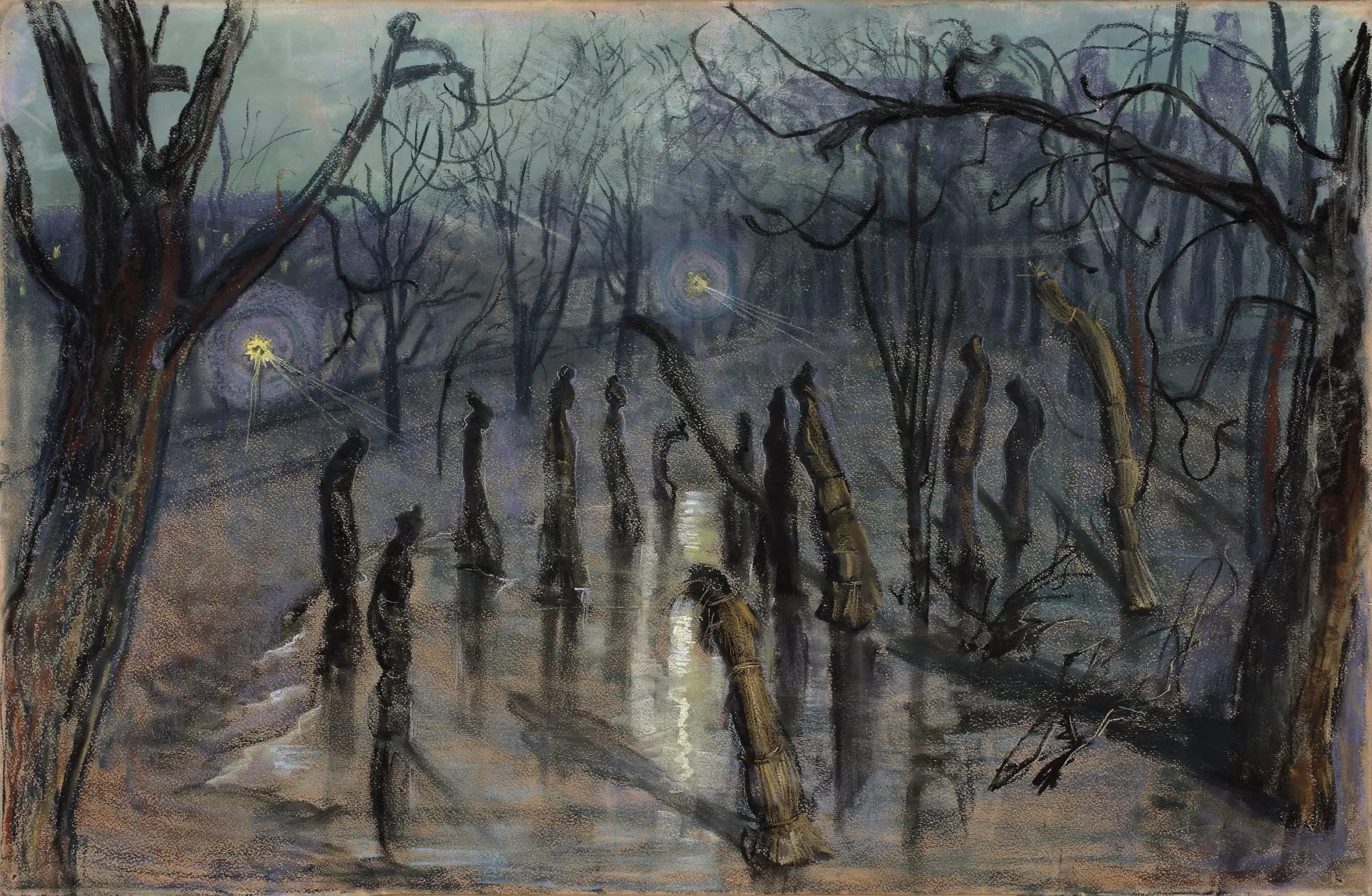
Nevertheless, his imagination was saturated with the symbols of the old capital of Kraków. This is particularly evident in his series of Acropolis plays that reinvigorated classical theater on royal Wawel Hill (Wajda started the Manggha museum across the river) [1]. It also informs his more enigmatic paintings of the capcheaves (chochoły) that encircle the city, connecting it to the Romantic mysteries of nature.
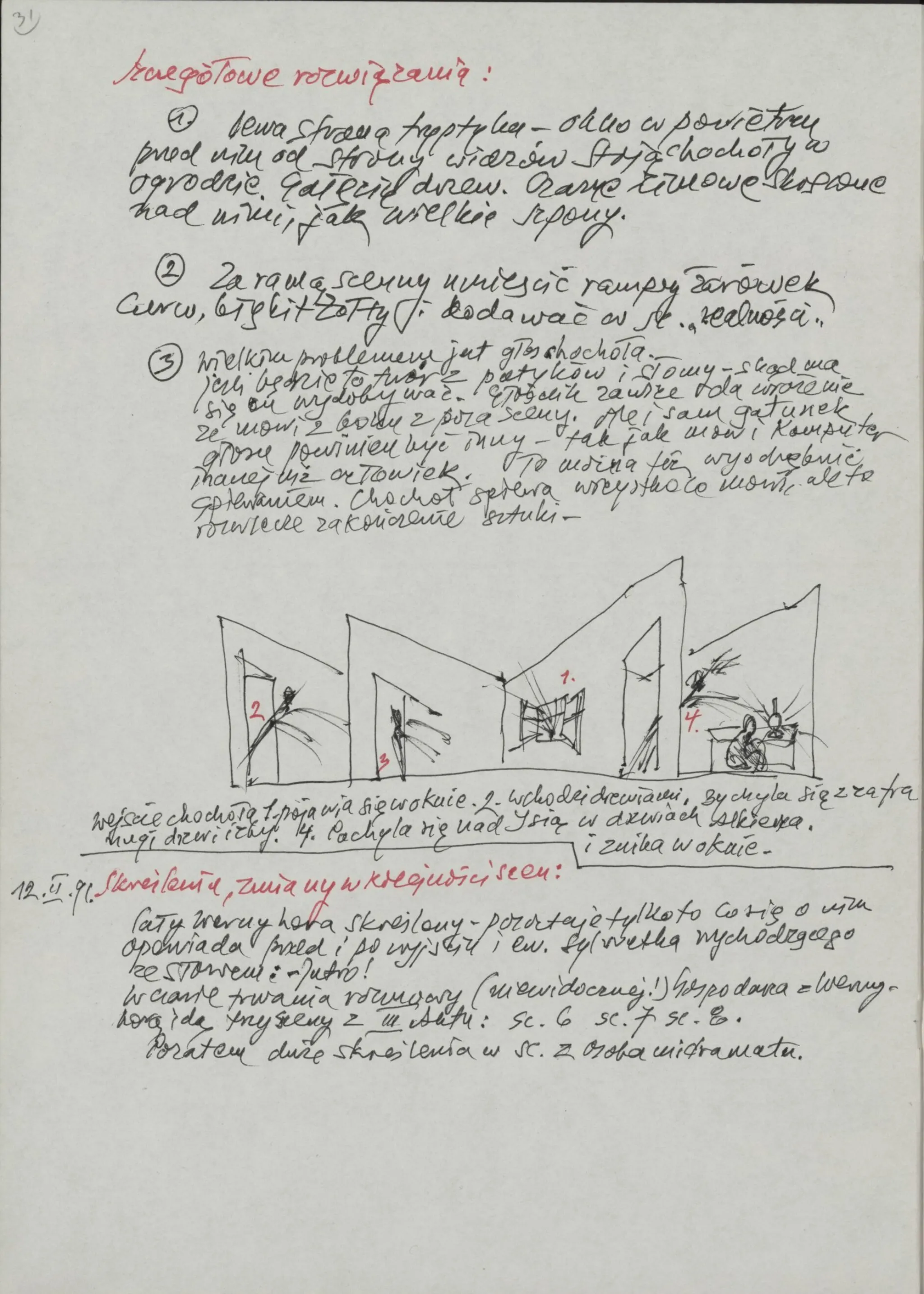
Appropriately, in his 1973 film version of Wyspiański's 1901 play The Wedding, Wajda attempts to synthesize Wyspiański's verbal and visual self-portraiture (left), as an intellectual marrying a peasant, with a distinctly cinematic emphasis on strange encounters and the logic of dreams (below).